Bow Ties and Light Leakage Explained
Everything you need to know about bow-ties and light leakage in fancy shaped lab diamonds.
Engagement Rings
CVD is the dominant method for growing lab diamonds today. Learn what to look for and how Ada's experts screen CVD diamonds.
CVD diamond, lab grown diamond quality, diamond crystal defects, brown diamonds, gray diamonds, lab diamond education
What is CVD?
Chemical vapor deposition, CVD, is one of two methods for growing lab diamonds today. It's a remarkable technology: pure carbon, deposited atom by atom over weeks, until a rough diamond crystal forms from nothing.
How a CVD diamond is grown; the quality of the seeds, the speed of the reactor, and the decisions made by the grower determine how a finished diamond looks in person. Two diamonds with identical grading reports can look completely different.
This guide covers how CVD diamonds are grown, the defects that can affect their appearance, and what our team looks for when evaluating them.
How CVD Diamonds are Grown
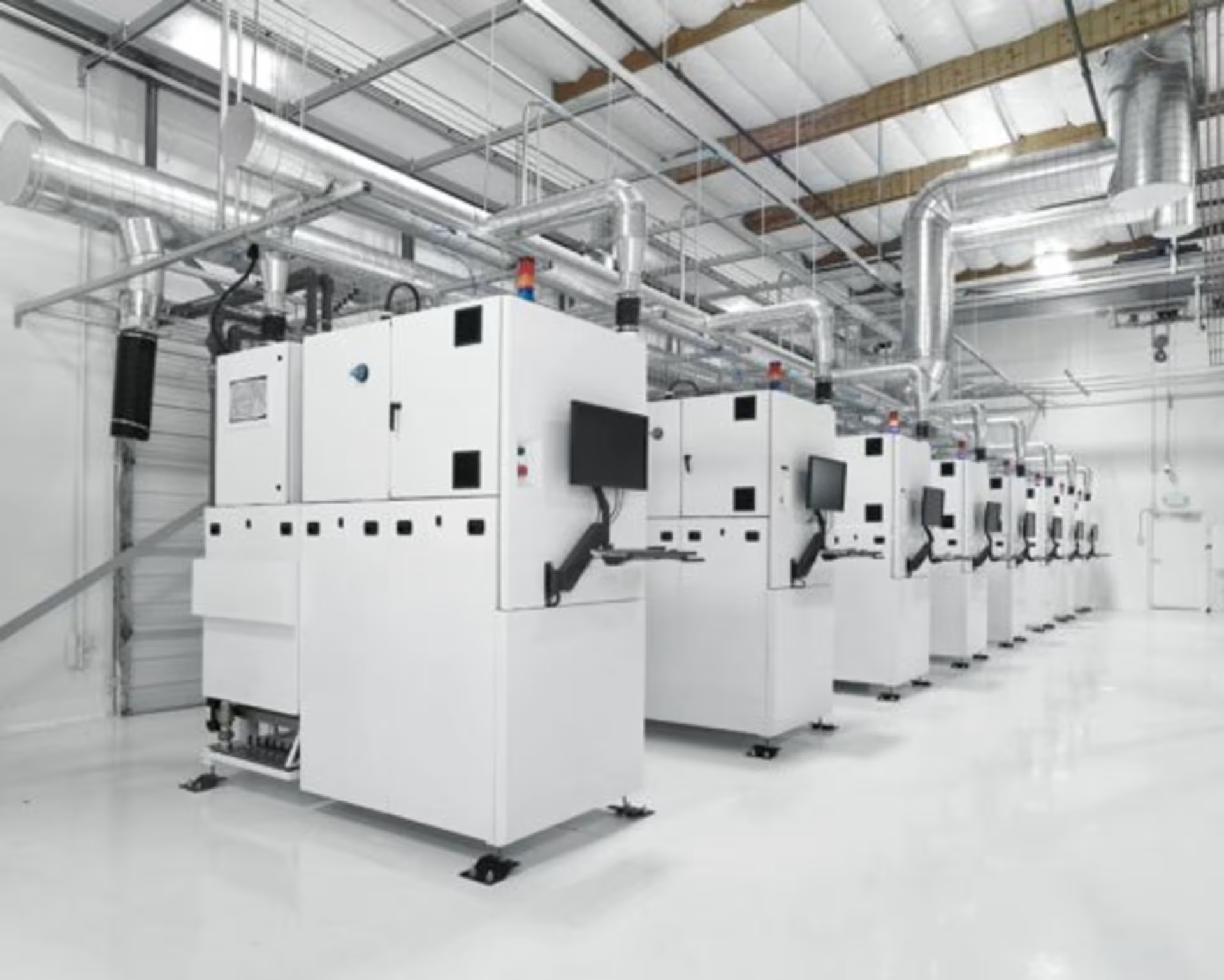
The process starts with the seed. Small diamond crystals are arranged on a growth platform inside a reactor. All the air is evacuated from the chamber. A high-power microwave generator activates, and ultra-pure methane is fed in. The microwave energy creates a plasma above the seeds, turning them a bright red. In that plasma, the methane breaks apart. The carbon attaches to the seeds and begins growing vertically, atom by atom, over weeks.
As the diamond grows, black polycrystalline material forms along the edges. That material is removed with a laser. The gem-quality crystal underneath is then cut from the rough.
One more step: approximately 80% of CVD diamonds undergo post-growth treatment before they're sold. The rough is loaded into an HPHT press for a short heat treatment, typically 15 to 30 minutes. This refines the crystal structure and improves the appearance of the stone.
Proper treatment makes diamonds better. We think the resistance to it in some corners of the industry is a hangover from the natural diamond world, where undisclosed treatment of a natural product is a legitimate concern. In lab grown diamonds, the product is manmade throughout. What one grower calls treatment, another considers part of the standard growth process.
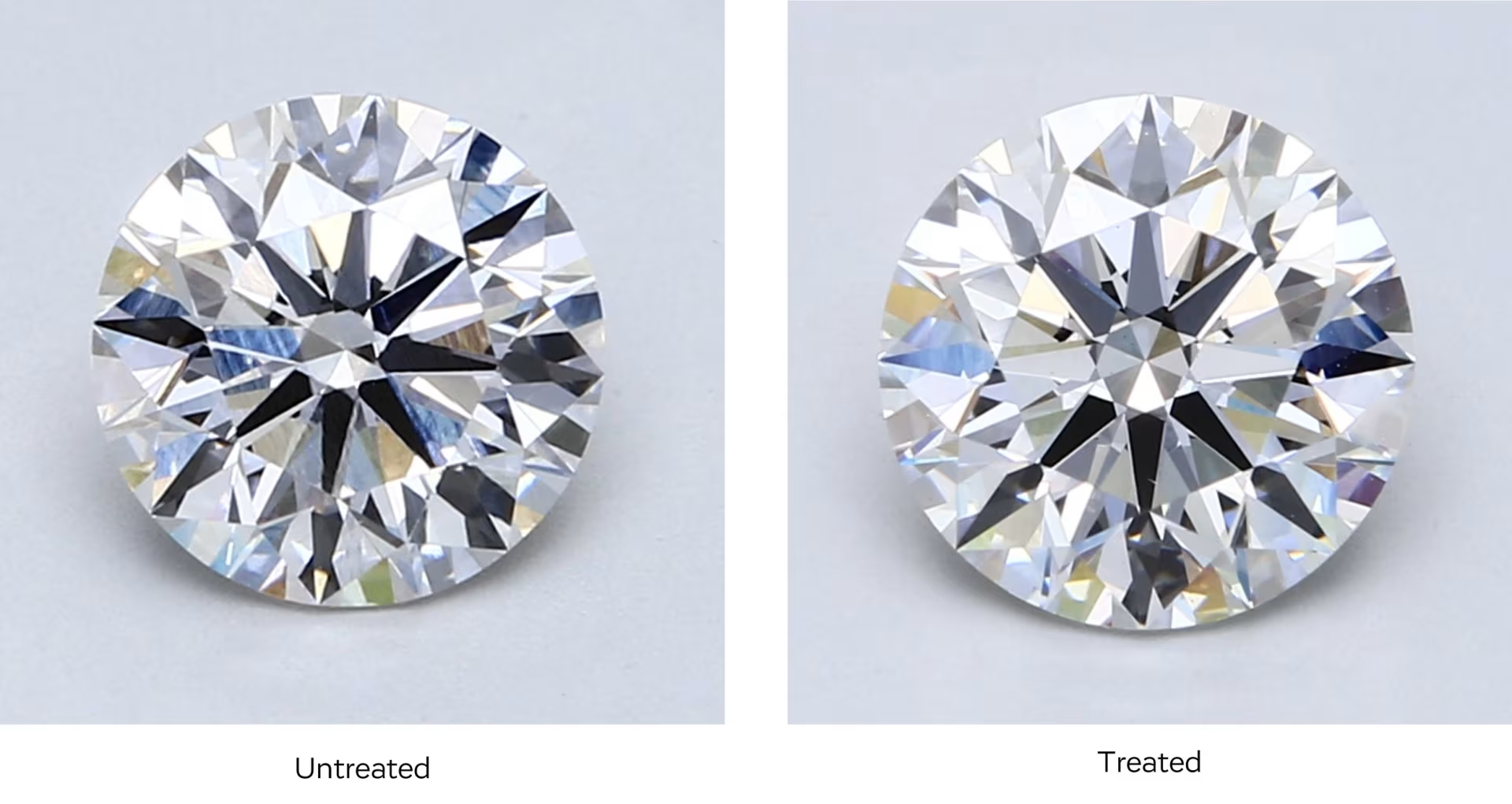
Not all treated CVD is good. Not all untreated CVD is bad. But treatment, done right, is a net positive.
How Ada Evaluates: BGS (Brown, Gray, Strain)
When our team evaluates CVD diamonds, we use a framework built around three categories of defect: brown, gray, and strain. We call it BGS.
A grading report won't flag any of these. They can only be assessed in person, in varying light conditions, at multiple angles. This is why we inspect every diamond ourselves before it enters our inventory.
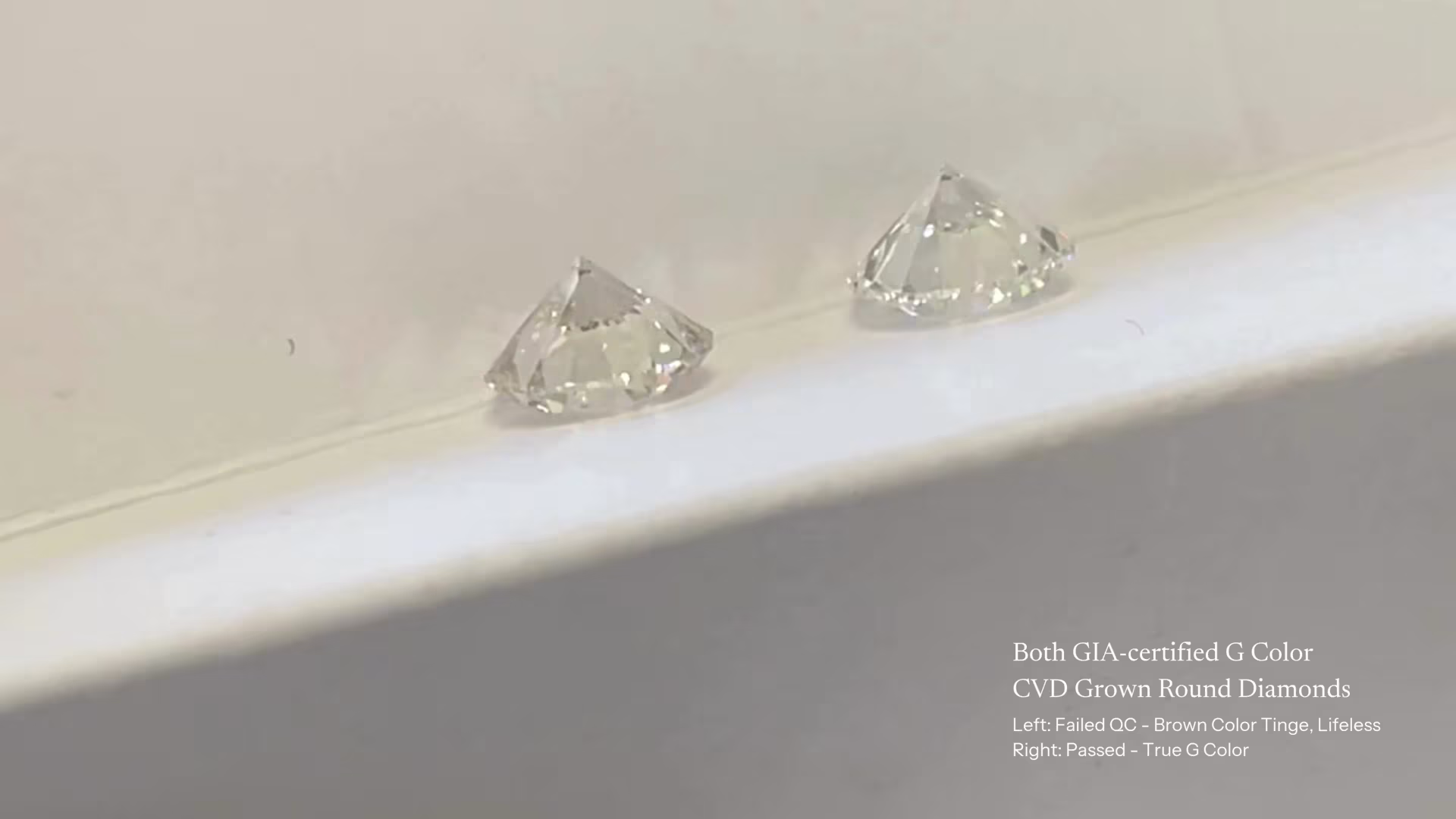
Brown is one of the more common color tinges in CVD diamonds. It can range from a warm pinkish brown to a cooler grayish brown. Two diamonds from the same grower, with the same color grade, can look noticeably different.
Brown in CVD has two primary causes.
Voids in the crystal structure. When nitrogen is added to speed up growth, and it does speed things up dramatically, by 200 to 300%, the faster deposition creates more opportunities for error. Atoms stack on each other, and sometimes there are stacking faults: gaps in the carbon lattice where atoms are simply missing, like bubbles trapped in ice. When light hits a void, it produces a brown coloration.
Nitrogen defects. CVD diamonds carry far less nitrogen than most natural diamonds, but the optical effect of that nitrogen is actually more apparent. Single substitutional nitrogen, individual nitrogen atoms sitting in the crystal lattice, creates a browner tone than the aggregated nitrogen clusters more common in natural stones. Nitrogen vacancy defects from low-pressure heat treatment can also create brownish pink hues.
The good news: brown can be treated out. Post-growth HPHT treatment removes voids from the crystal and aggregates the nitrogen atoms, reducing the coloration. An untreated brown diamond can become effectively colorless.
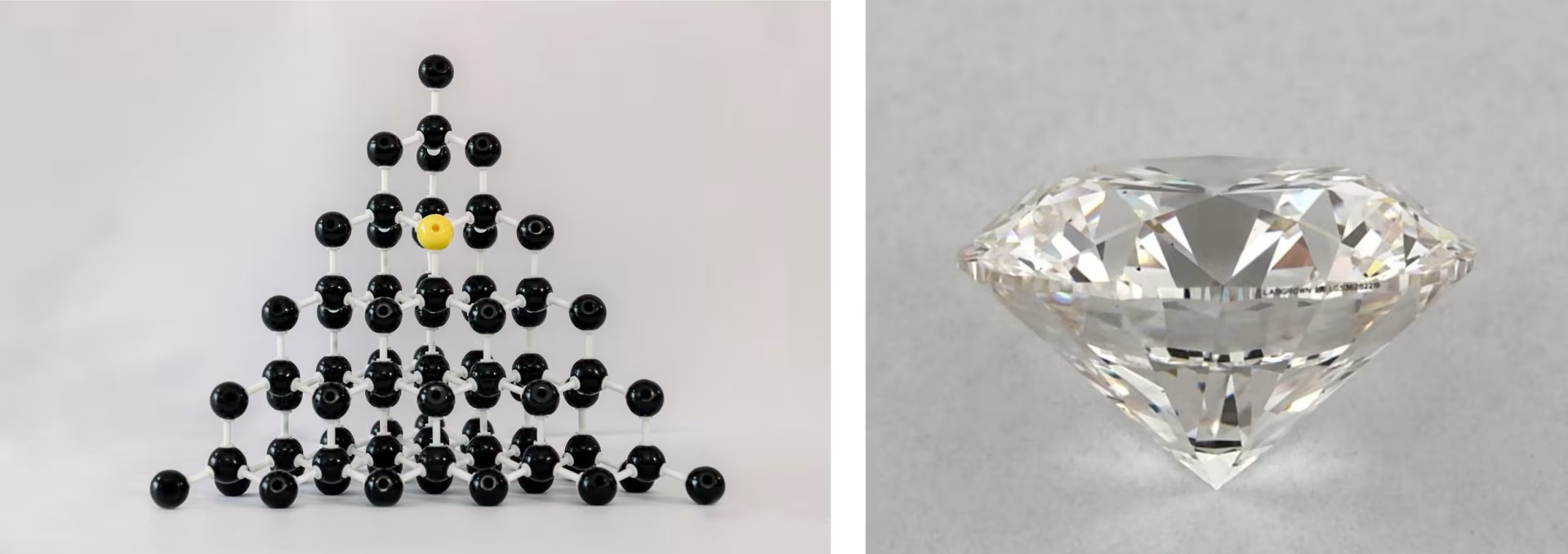
Nitrogen can give CVD diamonds a brown tone. Even though there is far less nitrogen in a CVD diamond than an average natural diamond, the optical consequences can be more obvious to the naked eye in CVD than in natural. Single substitutional atomic nitrogen is actually more apparent and brown in tone than aggregated nitrogen
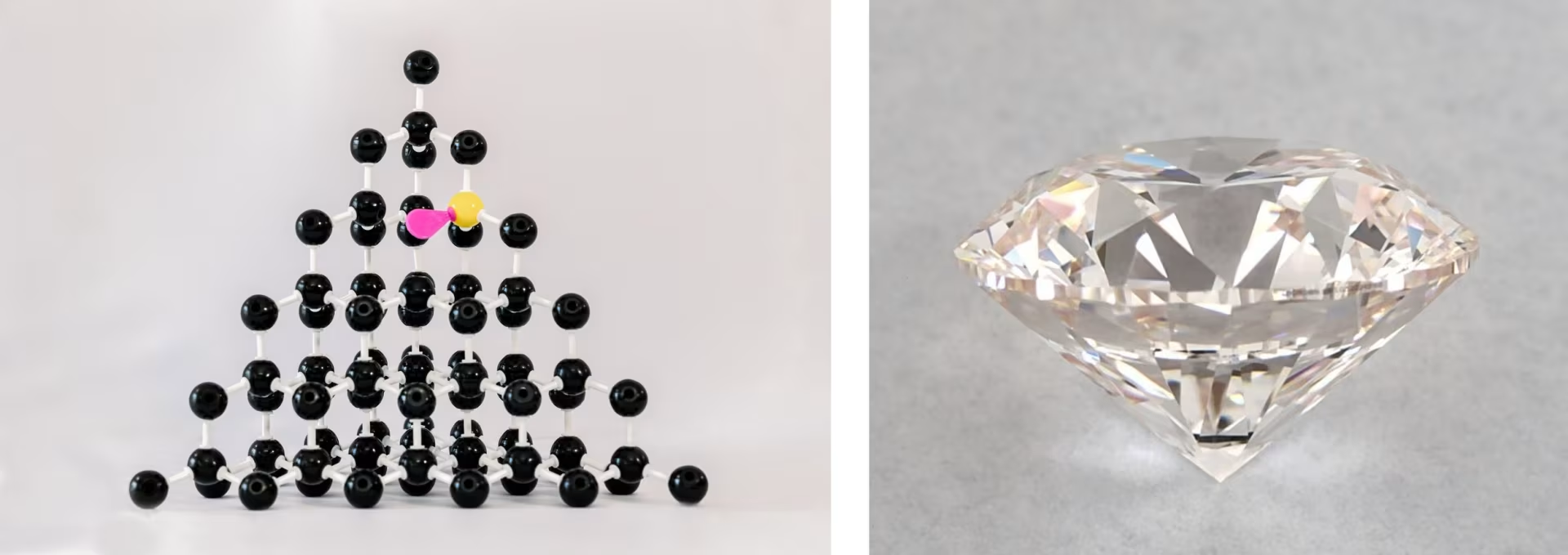
Brown can also mean brownish pink, and this is primarily caused by nitrogen vacancy defects resulting from low pressure, high temperature treatment.
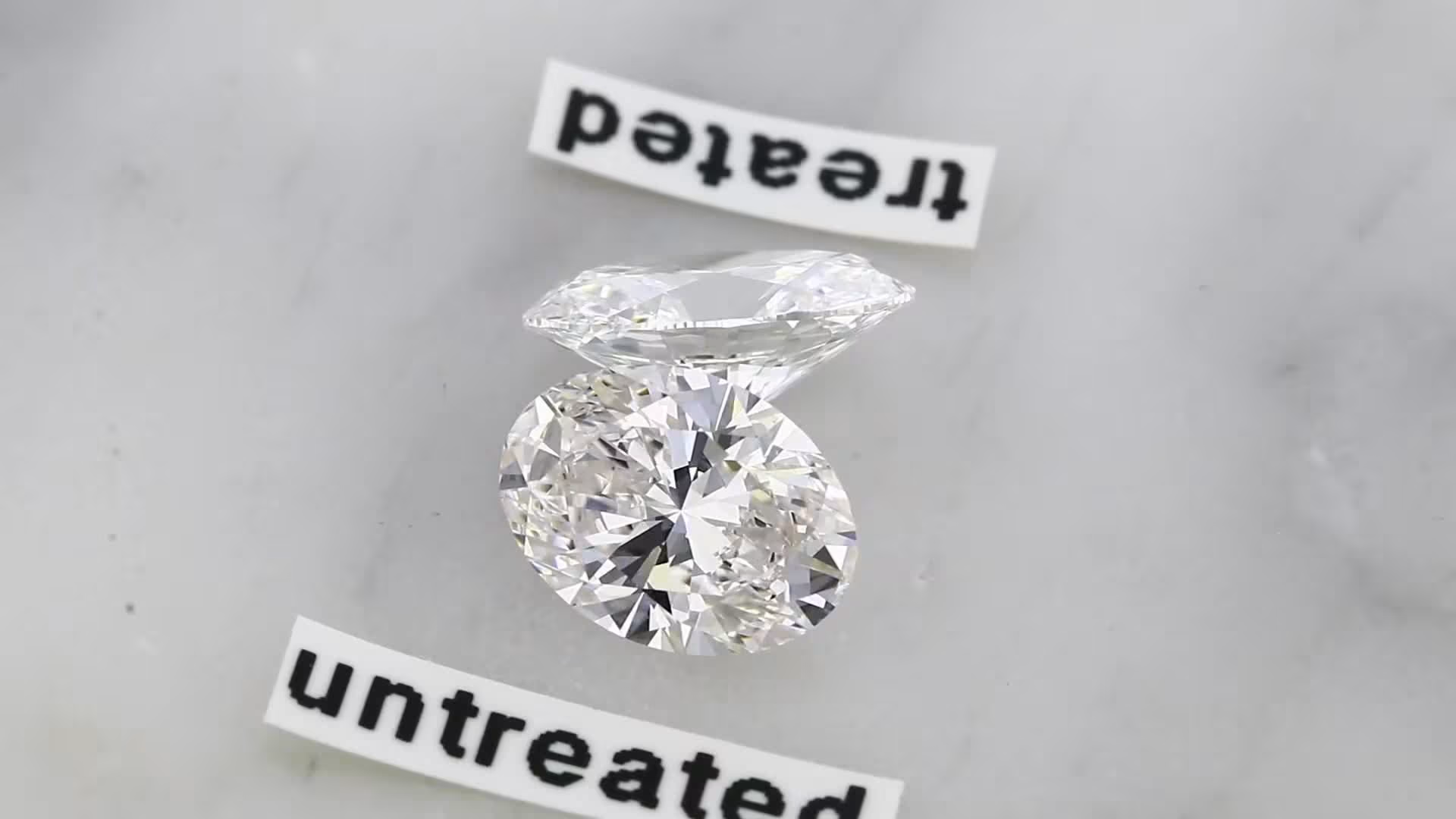
If the color of an as-grown CVD diamond is brown, it can be made colorless through post-growth treatment. The treatment can remove voids from the crystal structure and also aggregate the nitrogen atoms, reducing the amount of brown they create.
Gray is the most prevalent color tinge we see in CVD diamonds. It can appear as high as D color, and it can be subtle or obvious. It sometimes accompanies lifeless or low-contrast material, diamonds that look dull in ways that aren't captured by cut or clarity grades.
Gray has several causes, and they don't all respond the same way to treatment.
Excess Boron Compensating for Nitrogen. Adding nitrogen speeds up growth but leaves a brown tinge. Growers compensate by adding boron. The two atoms pair up and cancel each other's optical effects. But if there's too much boron, nitrogen is overruled and the diamond presents with a gray tone instead.
Silicon vacancy defects. Silicon trapped in the crystal lattice creates gray tinges. Silicon is rare in natural diamonds but common in CVD, usually because the quartz window of the reactor degrades under the plasma and burns off into the chamber. In some cases, silicon is added intentionally during growth.
Excess boron compensating for nitrogen. Adding nitrogen speeds up growth but leaves a brown tinge. Growers compensate by adding boron. The two atoms pair up and cancel each other's optical effects. But if there's too much boron, nitrogen is overruled and the diamond presents with a gray tone instead.
This is why gray is more complicated than brown. Treating a CVD diamond to remove brown can cause existing graphitic inclusions to expand into the spaces left by collapsed voids, making the gray tinge stronger. Removing the brown can make it more gray. It's one of the reasons in-person evaluation at multiple stages matters.
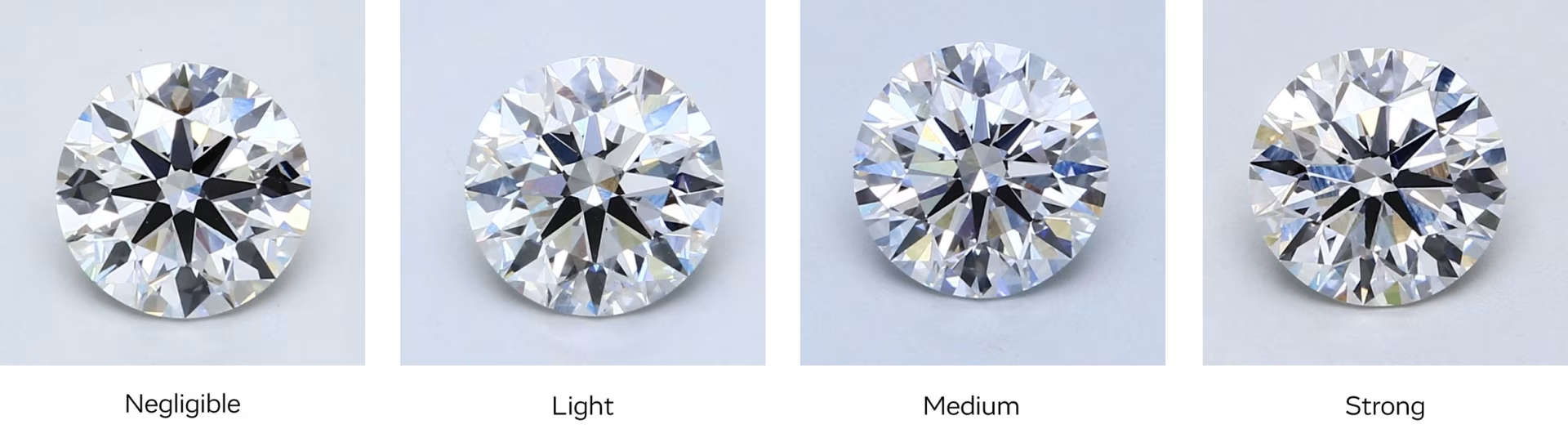
Strain presents as blurriness in the crystal. It looks almost like the diamond can never quite come into focus. The closest natural analog is graining, but strain is distinct. It causes light to scatter rather than return cleanly, which can make a diamond look hazy or low-contrast even at good clarity grades.
Strain is not binary. It exists on a scale, and there's little industry consensus on how to classify it. Critically, it doesn't appear in clarity plots or change clarity grades. All of the diamonds in our BGS framework examples are VVS in clarity.
The quality of the seed determines a lot. Seeds can have faults, uneven surfaces, and varying degrees of crystallographic perfection. Within a single reactor run, quality can vary significantly from one seed to the next. And seeds deteriorate with each use. Many growers reuse seeds well past their prime because replacing them is expensive. High-quality seeds can cost up to ten times what low-quality seeds cost.
Post-growth treatment helps. HPHT treatment effectively heals strain in many cases, which is another reason treated CVD generally performs better than untreated.
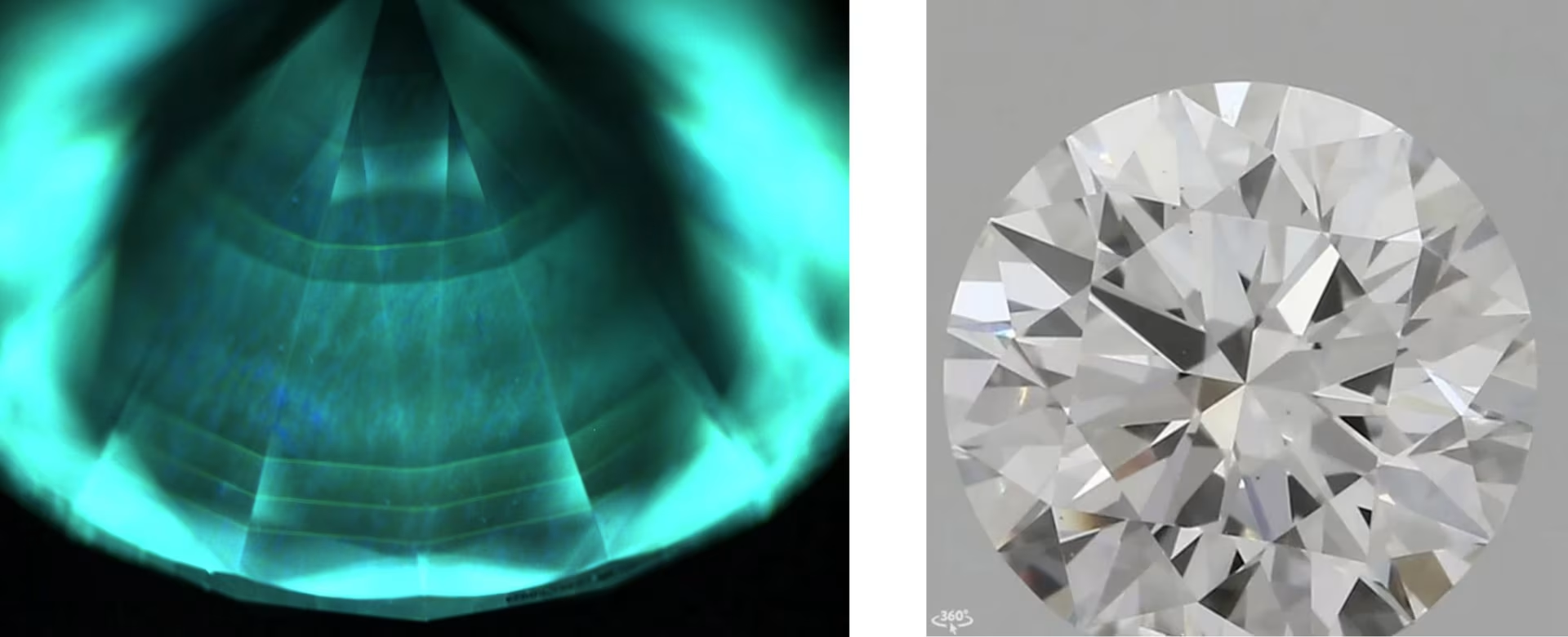
Striations are the result of stopping and restarting the CVD reactor. When polycrystalline material builds up as strain accumulates, the grower stops the machine, lasers off the layer, and resumes growth. Each stop-and-start cycle leaves a ring of diamond growth, a striation, visible in the crystal. Nearly all CVD diamonds have some striations. What matters is degree.
Every time the reactor stops and restarts, contaminants enter the plasma during the restart, causing those growth rings to appear dark gray. In heavily striated diamonds, those rings contribute to a visible gray tinge face up. A diamond with eight or more visible growth cycles will look noticeably different from one with fewer, cleaner cycles, even at the same color and clarity grade.
The Ada Diamonds Difference
The 5th C: Confidence
At Ada Diamonds, we specialize in premium lab grown diamonds. Unlike most retailers who offer diamonds for sale that they do not actually own, every diamond you see here has been evaluated in person and hand-selected by our experts.
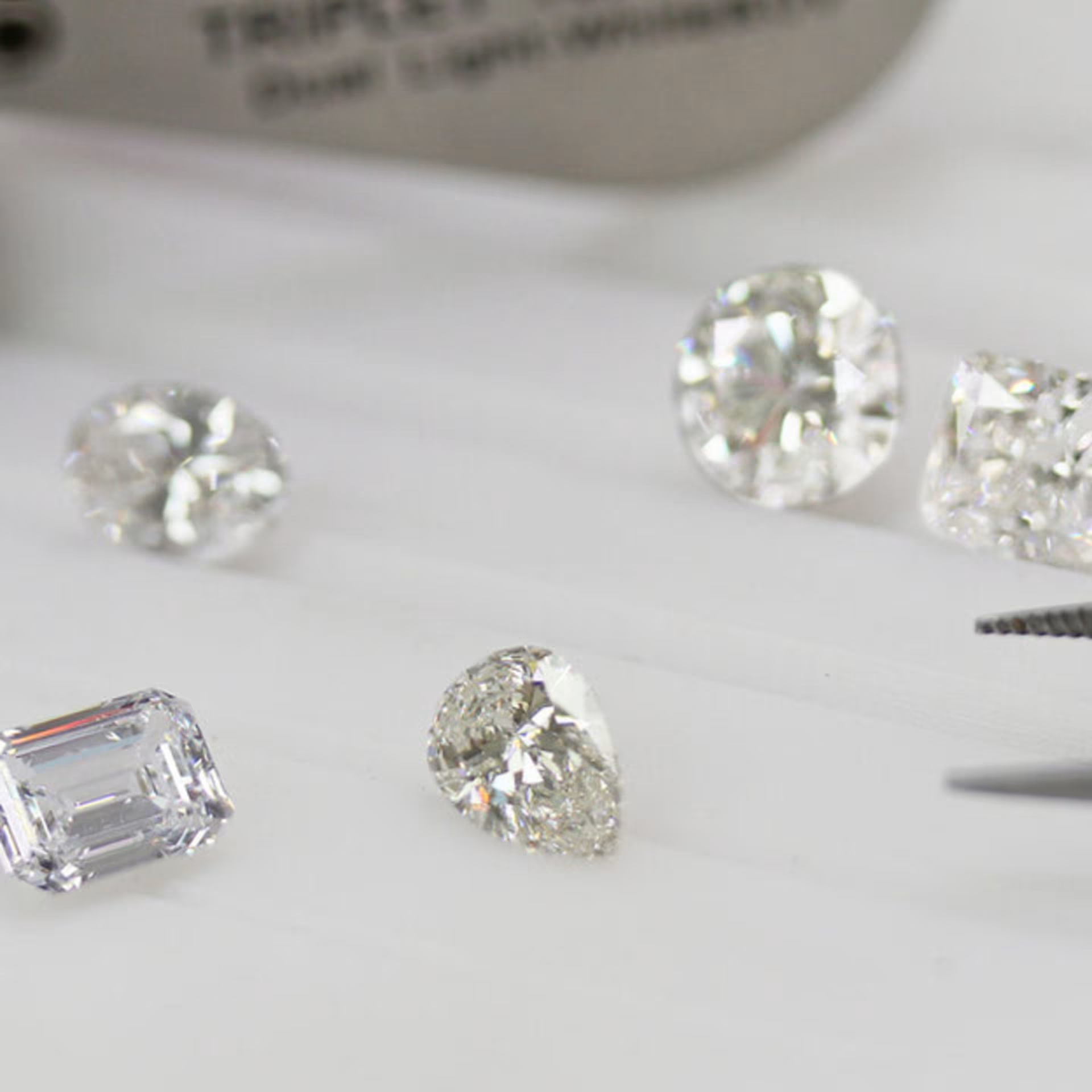
Why Lab Diamond Quality Varies
While diamond growth technology has improved, many growers who are capable of producing nice diamonds actively choose to grow ugly ones because it is so much cheaper and faster to do so.
Higher-quality stones take more time and precision to produce, trade at higher prices, and can rival some of the most exceptional natural diamonds.
At Ada, we are the leading experts in sourcing quality lab grown diamonds. Every diamond is inspected in-house before it’s ever offered, with only the ones that meet our strict standards making it through.
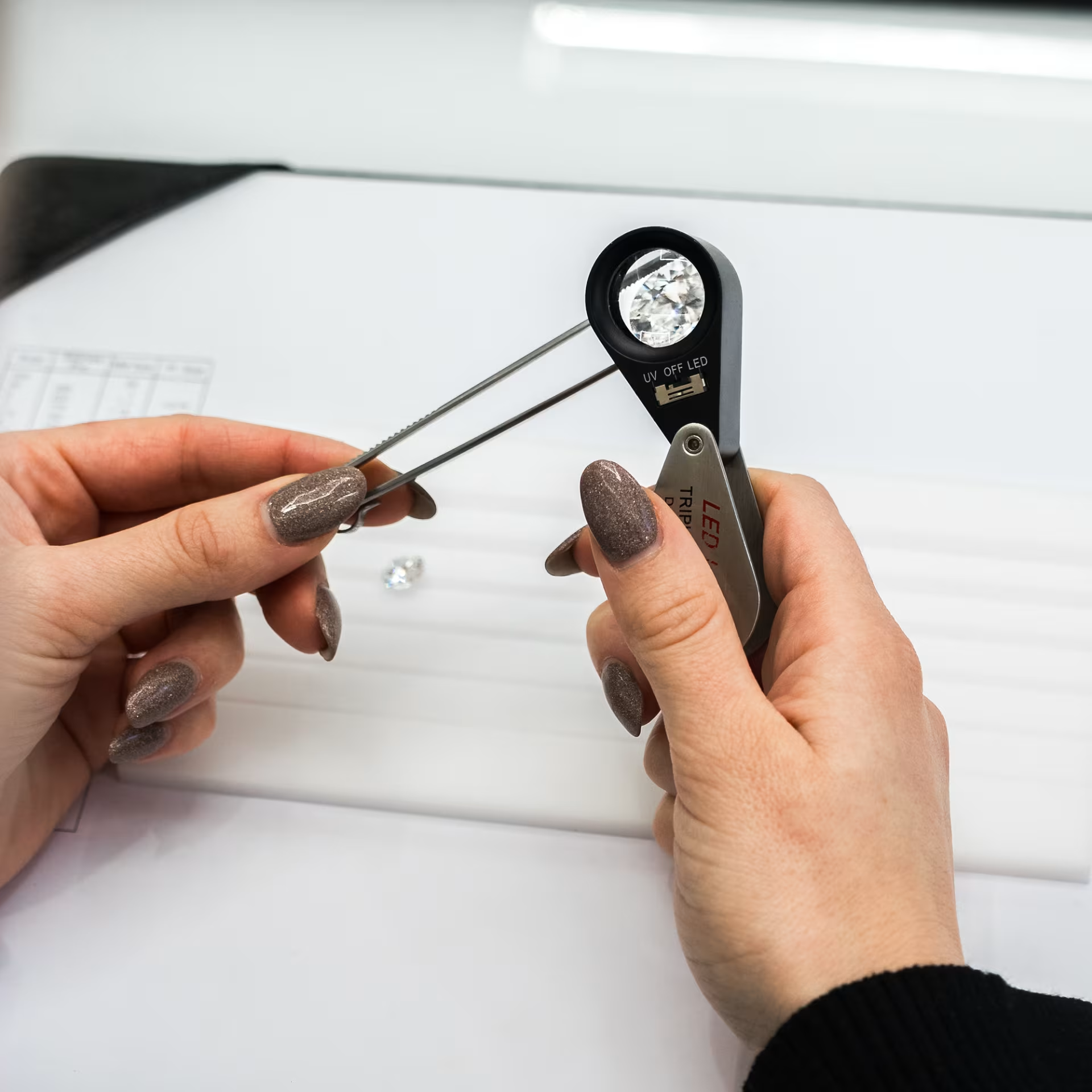
We’ve Done the Hard Part
Our Diamond QC team is built on real, hands-on experience. With extensive time spent evaluating lab diamonds across the full spectrum of quality.
They identify subtle issues others miss, from unnatural color and poor crystal material to undesirable inclusions and poor make, ensuring every diamond we offer meets our standards.
Because every stone is in house, we capture our own photos and videos using consistent lighting. What you see is a true-to-life representation, so you can compare with clarity.
Everything you need to know about bow-ties and light leakage in fancy shaped lab diamonds.
Engagement Rings
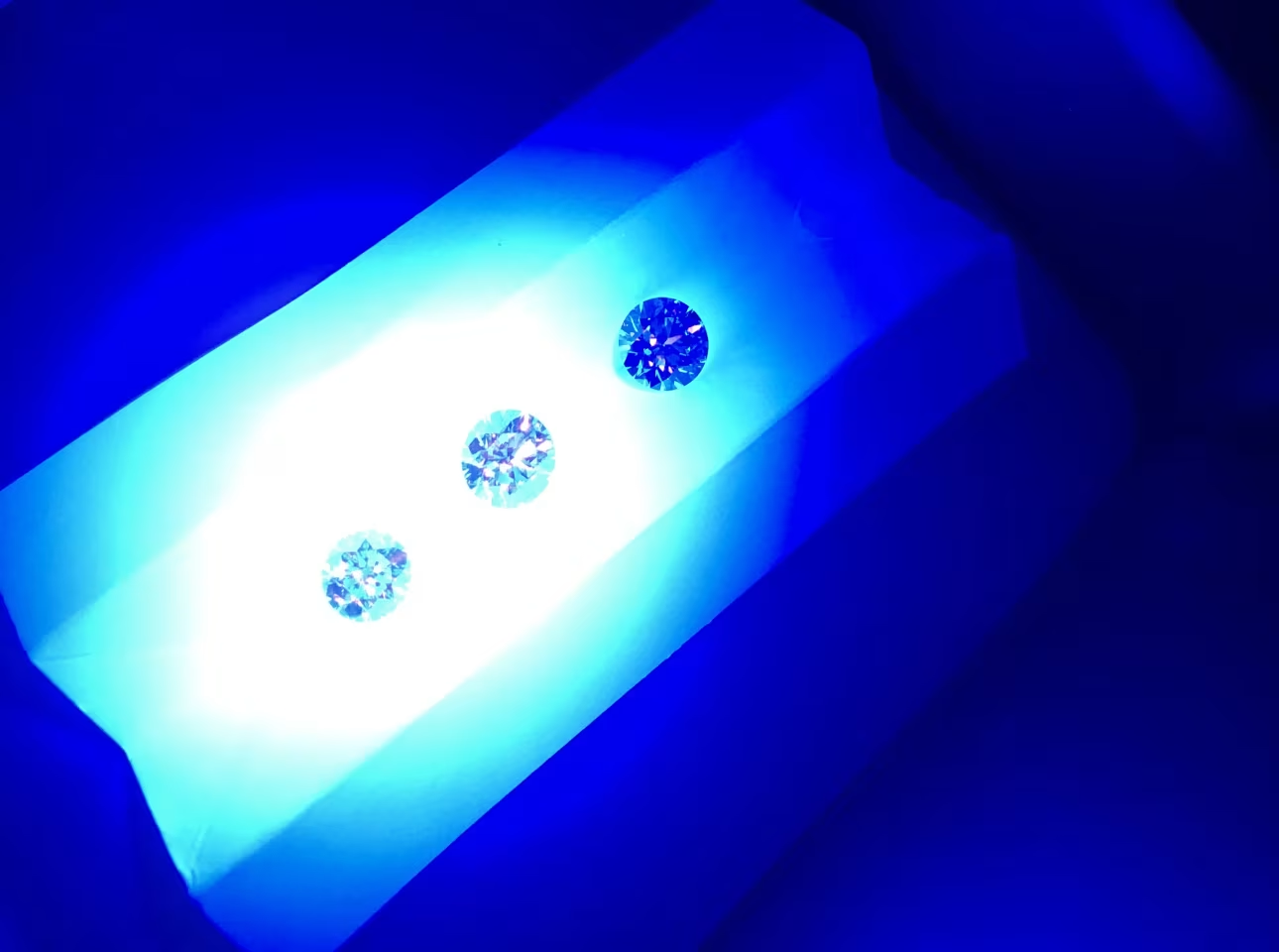
Blue nuance is a tinge of blue color present in HPHT diamonds, resulting from excess boron in the diamond after the growth process.
Diamond Education
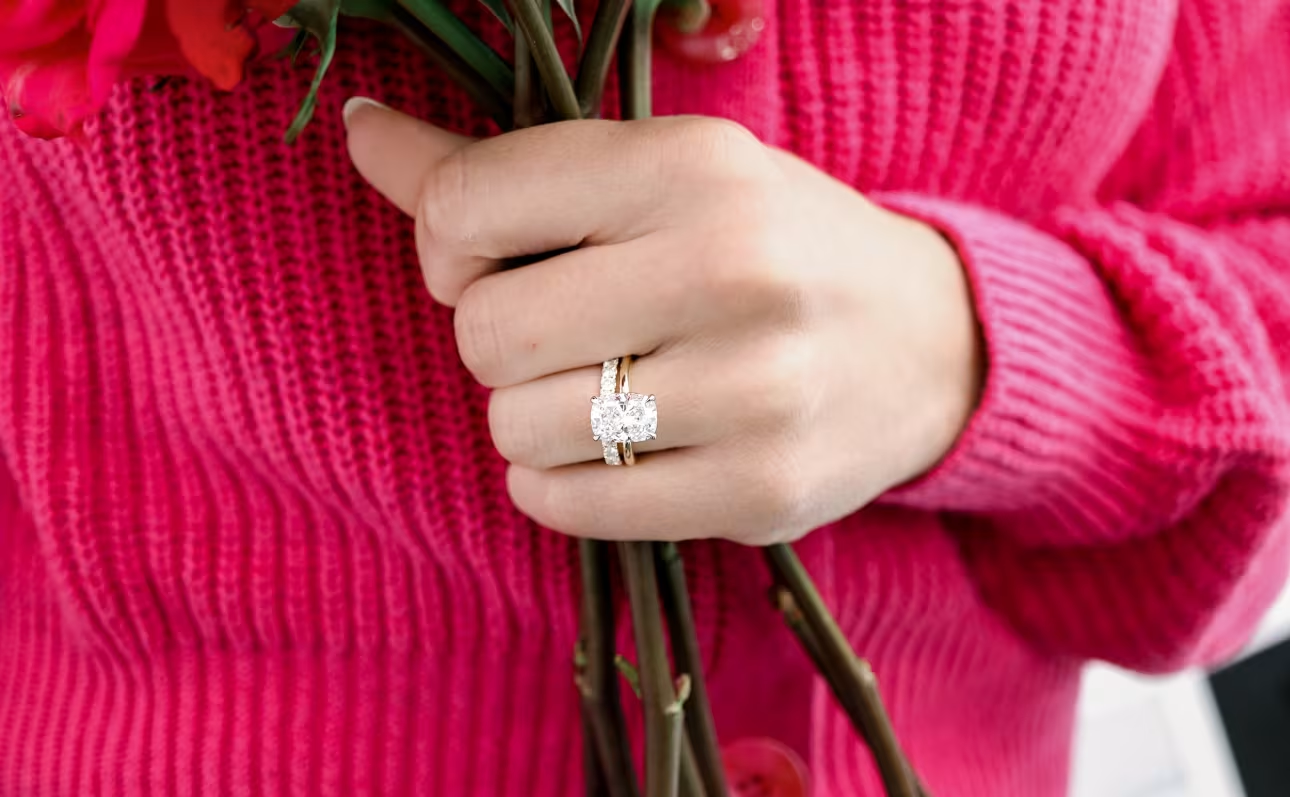
Diamond color measures the subtle tint present in a diamond. Learn how the D–Z color scale works, what color grades look white to the eye, and how Ada Diamonds evaluates lab diamonds for brightness and undesirable color undertones.
Diamond Education
CVD is the dominant method for growing lab diamonds today. Learn what to look for and how Ada's experts screen CVD diamonds.
CVD diamond, lab grown diamond quality, diamond crystal defects, brown diamonds, gray diamonds, lab diamond education
What is CVD?
Chemical vapor deposition, CVD, is one of two methods for growing lab diamonds today. It's a remarkable technology: pure carbon, deposited atom by atom over weeks, until a rough diamond crystal forms from nothing.
How a CVD diamond is grown; the quality of the seeds, the speed of the reactor, and the decisions made by the grower determine how a finished diamond looks in person. Two diamonds with identical grading reports can look completely different.
This guide covers how CVD diamonds are grown, the defects that can affect their appearance, and what our team looks for when evaluating them.
How CVD Diamonds are Grown
The process starts with the seed. Small diamond crystals are arranged on a growth platform inside a reactor. All the air is evacuated from the chamber. A high-power microwave generator activates, and ultra-pure methane is fed in. The microwave energy creates a plasma above the seeds, turning them a bright red. In that plasma, the methane breaks apart. The carbon attaches to the seeds and begins growing vertically, atom by atom, over weeks.
As the diamond grows, black polycrystalline material forms along the edges. That material is removed with a laser. The gem-quality crystal underneath is then cut from the rough.
One more step: approximately 80% of CVD diamonds undergo post-growth treatment before they're sold. The rough is loaded into an HPHT press for a short heat treatment, typically 15 to 30 minutes. This refines the crystal structure and improves the appearance of the stone.
Proper treatment makes diamonds better. We think the resistance to it in some corners of the industry is a hangover from the natural diamond world, where undisclosed treatment of a natural product is a legitimate concern. In lab grown diamonds, the product is manmade throughout. What one grower calls treatment, another considers part of the standard growth process.
Not all treated CVD is good. Not all untreated CVD is bad. But treatment, done right, is a net positive.
How Ada Evaluates: BGS (Brown, Gray, Strain)
When our team evaluates CVD diamonds, we use a framework built around three categories of defect: brown, gray, and strain. We call it BGS.
A grading report won't flag any of these. They can only be assessed in person, in varying light conditions, at multiple angles. This is why we inspect every diamond ourselves before it enters our inventory.
Brown is one of the more common color tinges in CVD diamonds. It can range from a warm pinkish brown to a cooler grayish brown. Two diamonds from the same grower, with the same color grade, can look noticeably different.
Brown in CVD has two primary causes.
Voids in the crystal structure. When nitrogen is added to speed up growth, and it does speed things up dramatically, by 200 to 300%, the faster deposition creates more opportunities for error. Atoms stack on each other, and sometimes there are stacking faults: gaps in the carbon lattice where atoms are simply missing, like bubbles trapped in ice. When light hits a void, it produces a brown coloration.
Nitrogen defects. CVD diamonds carry far less nitrogen than most natural diamonds, but the optical effect of that nitrogen is actually more apparent. Single substitutional nitrogen, individual nitrogen atoms sitting in the crystal lattice, creates a browner tone than the aggregated nitrogen clusters more common in natural stones. Nitrogen vacancy defects from low-pressure heat treatment can also create brownish pink hues.
The good news: brown can be treated out. Post-growth HPHT treatment removes voids from the crystal and aggregates the nitrogen atoms, reducing the coloration. An untreated brown diamond can become effectively colorless.
Nitrogen can give CVD diamonds a brown tone. Even though there is far less nitrogen in a CVD diamond than an average natural diamond, the optical consequences can be more obvious to the naked eye in CVD than in natural. Single substitutional atomic nitrogen is actually more apparent and brown in tone than aggregated nitrogen
Brown can also mean brownish pink, and this is primarily caused by nitrogen vacancy defects resulting from low pressure, high temperature treatment.
If the color of an as-grown CVD diamond is brown, it can be made colorless through post-growth treatment. The treatment can remove voids from the crystal structure and also aggregate the nitrogen atoms, reducing the amount of brown they create.
Gray is the most prevalent color tinge we see in CVD diamonds. It can appear as high as D color, and it can be subtle or obvious. It sometimes accompanies lifeless or low-contrast material, diamonds that look dull in ways that aren't captured by cut or clarity grades.
Gray has several causes, and they don't all respond the same way to treatment.
Excess Boron Compensating for Nitrogen. Adding nitrogen speeds up growth but leaves a brown tinge. Growers compensate by adding boron. The two atoms pair up and cancel each other's optical effects. But if there's too much boron, nitrogen is overruled and the diamond presents with a gray tone instead.
Silicon vacancy defects. Silicon trapped in the crystal lattice creates gray tinges. Silicon is rare in natural diamonds but common in CVD, usually because the quartz window of the reactor degrades under the plasma and burns off into the chamber. In some cases, silicon is added intentionally during growth.
Excess boron compensating for nitrogen. Adding nitrogen speeds up growth but leaves a brown tinge. Growers compensate by adding boron. The two atoms pair up and cancel each other's optical effects. But if there's too much boron, nitrogen is overruled and the diamond presents with a gray tone instead.
This is why gray is more complicated than brown. Treating a CVD diamond to remove brown can cause existing graphitic inclusions to expand into the spaces left by collapsed voids, making the gray tinge stronger. Removing the brown can make it more gray. It's one of the reasons in-person evaluation at multiple stages matters.
Strain presents as blurriness in the crystal. It looks almost like the diamond can never quite come into focus. The closest natural analog is graining, but strain is distinct. It causes light to scatter rather than return cleanly, which can make a diamond look hazy or low-contrast even at good clarity grades.
Strain is not binary. It exists on a scale, and there's little industry consensus on how to classify it. Critically, it doesn't appear in clarity plots or change clarity grades. All of the diamonds in our BGS framework examples are VVS in clarity.
The quality of the seed determines a lot. Seeds can have faults, uneven surfaces, and varying degrees of crystallographic perfection. Within a single reactor run, quality can vary significantly from one seed to the next. And seeds deteriorate with each use. Many growers reuse seeds well past their prime because replacing them is expensive. High-quality seeds can cost up to ten times what low-quality seeds cost.
Post-growth treatment helps. HPHT treatment effectively heals strain in many cases, which is another reason treated CVD generally performs better than untreated.
Striations are the result of stopping and restarting the CVD reactor. When polycrystalline material builds up as strain accumulates, the grower stops the machine, lasers off the layer, and resumes growth. Each stop-and-start cycle leaves a ring of diamond growth, a striation, visible in the crystal. Nearly all CVD diamonds have some striations. What matters is degree.
Every time the reactor stops and restarts, contaminants enter the plasma during the restart, causing those growth rings to appear dark gray. In heavily striated diamonds, those rings contribute to a visible gray tinge face up. A diamond with eight or more visible growth cycles will look noticeably different from one with fewer, cleaner cycles, even at the same color and clarity grade.
The Ada Diamonds Difference
The 5th C: Confidence
At Ada Diamonds, we specialize in premium lab grown diamonds. Unlike most retailers who offer diamonds for sale that they do not actually own, every diamond you see here has been evaluated in person and hand-selected by our experts.
Why Lab Diamond Quality Varies
While diamond growth technology has improved, many growers who are capable of producing nice diamonds actively choose to grow ugly ones because it is so much cheaper and faster to do so.
Higher-quality stones take more time and precision to produce, trade at higher prices, and can rival some of the most exceptional natural diamonds.
At Ada, we are the leading experts in sourcing quality lab grown diamonds. Every diamond is inspected in-house before it’s ever offered, with only the ones that meet our strict standards making it through.
We’ve Done the Hard Part
Our Diamond QC team is built on real, hands-on experience. With extensive time spent evaluating lab diamonds across the full spectrum of quality.
They identify subtle issues others miss, from unnatural color and poor crystal material to undesirable inclusions and poor make, ensuring every diamond we offer meets our standards.
Because every stone is in house, we capture our own photos and videos using consistent lighting. What you see is a true-to-life representation, so you can compare with clarity.
Everything you need to know about bow-ties and light leakage in fancy shaped lab diamonds.
Engagement Rings
Blue nuance is a tinge of blue color present in HPHT diamonds, resulting from excess boron in the diamond after the growth process.
Diamond Education
Diamond color measures the subtle tint present in a diamond. Learn how the D–Z color scale works, what color grades look white to the eye, and how Ada Diamonds evaluates lab diamonds for brightness and undesirable color undertones.
Diamond Education